
Heavy Duty Job Cart Fabrication: Built for the Work, Not Just the Weight
A job cart is only useful when it takes the same abuse your crew does. Here's what separates a cart that lasts from one that fails on the job.
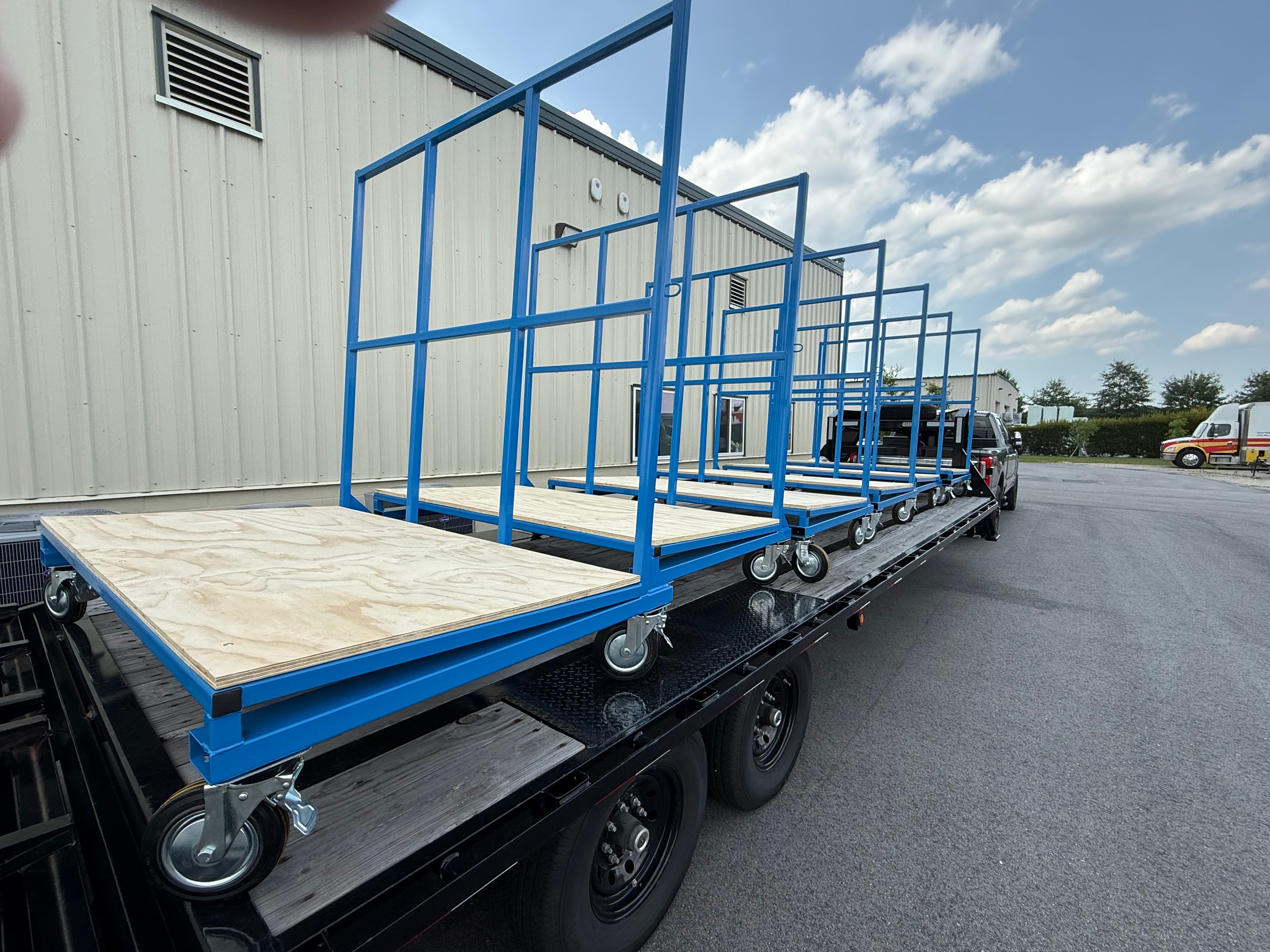
A job cart is only useful when it takes the same abuse your crew does. Heavy duty job cart fabrication is not about putting casters under a steel box. It is about building a piece of equipment that carries the right load, fits the workspace, protects expensive tools, and keeps work moving instead of creating another problem to work around.
For contractors, maintenance departments, welders, fleet shops, and specialty trades, a cart often becomes the center of the job. It may carry welders, bottles, generators, parts bins, power tools, fasteners, or equipment that needs to move between bays and job sites. A light-duty cart that twists under load, catches on every threshold, or leaves tools exposed will cost time every day. Downtime costs money, and so does replacing damaged equipment.
Start Heavy Duty Job Cart Fabrication With the Job
The strongest cart is not automatically the best cart. The right build starts with what the cart has to do, where it will run, and who will use it. A cart that stays inside a smooth concrete shop has different needs than one that crosses gravel, loading ramps, parking lots, and unfinished work sites.
Load is the first question, but total weight is only part of the answer. A cart carrying a 600-pound machine low in the frame behaves very differently from one carrying tall toolboxes, cable reels, and gas cylinders. The center of gravity matters. So does how the load shifts when the cart stops, turns, or rolls across uneven ground.
Think through the full working load, not just the equipment sitting on the cart at the start of the day. Add consumables, cords, hardware, fuel, spare parts, and the worker who may lean or pull against it. If the cart will be loaded by forklift, moved with a truck, or secured in a trailer, those requirements should be built into the plan from the beginning.
At HCR Custom Fabrication, that conversation happens with the people doing the building. That means details such as a needed tie-down point, a handle location, or clearance around a truck body can be handled before steel is cut instead of patched later.
Frame Strength Comes From Design, Not Just Thick Steel
Heavy steel can hide a weak layout. A cart needs a frame that supports the load without excessive flex, especially around the caster mounts, handles, shelves, drawer openings, and equipment mounting points. Those are the areas that see concentrated force and repeated shock.
Square and rectangular tubing are common choices because they provide good strength and clean mounting surfaces. Angle, channel, plate, and expanded metal all have their place as well. The right material depends on span length, expected load, access needs, and whether the cart must remain light enough for one person to move.
Crossmembers matter. A wide shelf made from thin sheet may look fine empty, then sag once it is loaded with fittings, batteries, or heavy tools. Properly placed braces and supports keep shelves flat and prevent the frame from working loose over time. Good fabrication also considers the force of a hard pull on the handle, not just vertical weight sitting still.
Weld quality is part of the structure, but the overall design has to give those welds a fair job. A cleanly welded cart with poor load paths can still crack or rack. Built to last means accounting for real use: curb impacts, vibration, wet boots, hurried loading, and the occasional time someone asks the cart to carry more than planned.
Casters Are a Working Component
Casters are often where a cart build succeeds or fails. They should be selected for the actual combined weight, the floor or ground condition, required turning radius, and the speed at which the cart will move. Four swivel casters make a cart easy to position in tight areas, but two rigid and two swivel casters can track better over longer distances.
Wheel material also changes the result. Polyurethane wheels are a strong choice for many shop floors because they roll smoothly and resist wear. Pneumatic wheels handle rough ground better but need more attention and can go flat. Steel wheels carry serious weight but can be noisy, rough on floors, and less forgiving over debris.
Brake placement deserves the same attention. A cart that supports valuable equipment should not drift while a worker is operating a machine, opening a drawer, or loading material. For certain applications, total-lock casters that secure both wheel roll and swivel are worth the added cost.
Build the Layout Around the Workflow
The best job cart reduces steps. It puts the tools and materials a worker reaches for most often where they can be grabbed safely without bending, climbing around the cart, or moving other gear first.
A welding cart may need a protected bottle rack, chain restraints, cable hooks, a shelf for a machine, and room to keep leads organized. A maintenance cart may need lockable drawers for meters and specialty hand tools, divided bins for hardware, a writing surface, and a lower shelf for parts. A mobile fabrication cart might need a vise mount, removable fixture plate, grinder holder, and designated spots for clamps and consumables.
There is no one-size-fits-all layout. Open shelving is fast and simple, but it does not protect tools during transport. Drawers improve organization and security, but they add cost, weight, and maintenance needs. A fixed top is stable for a machine or work surface, while removable or adjustable mounts give the cart more than one purpose.
The cart must also work when it is full. Drawer access should not be blocked by handles or mounted equipment. Cords need a path that does not create a trip hazard. Tall items should be restrained. If the cart will go in a service truck or enclosed trailer, the overall height, width, and tie-down strategy need to be figured before fabrication begins.
Details That Make a Cart Safer to Use
A heavy-duty cart needs handles placed at a useful height and far enough from the load to protect hands from pinch points. Rounded corners, capped tube ends, cleanly dressed edges, and solid grab locations are not cosmetic extras. They make a cart easier and safer to use through a long workday.
For equipment with fuel, heat, electrical components, or compressed gas, the build should account for ventilation, service access, and restraint. A machine that is difficult to inspect or remove for repair may turn a simple service call into a major interruption. Service doors, bolt-on mounts, and accessible hardware can save real time later.
Finish is another practical decision. A painted cart can be repaired easily and gives a clean professional appearance. Powder coating offers a durable finish for many indoor and light outdoor applications. Bare steel may make sense for fixtures and carts that will be modified often, but it needs protection if corrosion is a concern. The right answer depends on the work environment, not just appearance.
When Custom Fabrication Is Worth It
A store-bought cart can be the right choice for light tools and basic shop use. Custom fabrication earns its place when the cart carries expensive equipment, has an unusual footprint, needs to fit a vehicle or trailer, or must solve a specific workflow problem.
It is also the better route when generic carts have already failed. Bent caster plates, sagging shelves, broken handles, and constantly tangled cords are usually signs that the equipment has outgrown the cart underneath it. Replacing that cart with another version of the same design only repeats the problem.
A custom-built cart lets you choose the frame, caster setup, storage, mounting system, tie-downs, finish, and dimensions as one complete package. That matters for crews that depend on consistent equipment placement and for owners who want one accountable shop to handle design, fabrication, adjustments, and future repairs.
Before ordering a cart, bring measurements of the equipment, photos of the work area, and a clear picture of how it will be loaded and moved. Mention the heaviest expected load, the roughest surface it will cross, and anything that has failed on the current setup. Those details turn a cart from a steel project into a working tool built to your specs, built to haul, and ready to earn its space every day.
Explore Topics
Written by
HCR Custom Fabrication
Metal fabricators serving Hampton Roads from our shop in Chesapeake, VA. Custom steel flatbeds, job carts, RV tow bars, and more — built to spec, built to last.
HCR Custom Fabrication — Chesapeake, VA
Ready to Build Something That Lasts?
Serving Hampton Roads contractors, truck owners, and fleet shops from our shop in Chesapeake, VA.
Get a Free Quote